How to dog-proof your Christmas tree
A stable stand, an inaccessible water reservoir and a..
Read more
No kennels close by? Try to find a kennel near your point of departure
Find a Kennel
Updated 10 November 2026.
Choose a car restraint that fits your dog, works with your vehicle and can be installed exactly as instructed. A harness, secured crate or suitable guard can help manage movement, but they do not all provide the same protection. A cheap seat-belt tether attached to a collar should not be treated as equivalent to a purpose-designed travel system.
Start with the dog’s size and the space available, then check the exact product’s installation and testing evidence. This guide compares types and buying questions; it is not a crash test of the products sold online.
For Great Britain, rule 57 advises suitable restraint so an animal cannot distract the driver or cause injury during a sudden stop. It identifies a seat-belt harness, carrier, cage or guard as possible methods.
The Code’s introduction distinguishes mandatory legal wording from advisory rules and explains that the Code can be used in evidence. Avoid treating one accessory purchase as a guarantee of legal compliance, crash protection or insurance cover. Follow the relevant rules where you travel and check your policy terms directly if needed.
| Type | Main questions | Limitation to consider |
|---|---|---|
| Purpose-designed car harness | Exact fit, routing, attachment and compatible seating position | A walking harness or generic tether may have no relevant crash evidence |
| Secured carrier or crate | Dog size, ventilation, vehicle fit and approved installation | A loose crate can move; not every household crate is designed for vehicle restraint |
| Vehicle-specific or compatible boot guard | Mounting points, fit and access to the passenger area | A barrier can protect occupants without protecting the dog within the boot |
| Booster or travel bed | What provides the actual restraint and how it is installed | Padding or raised height alone is not a restraint system |
Ask the manufacturer if an installation detail is unclear. Do not improvise attachment points or combine components that have not been approved to work together.
Measure using the maker’s instructions and check the dog can sit, lie down and breathe comfortably. Use the specified vehicle attachment and routing. Too much movement can allow access to the driver or a fall from the seat, while a poor fit can create pressure or entanglement.
Do not attach a restraint tether to an ordinary collar around the neck. Check whether the harness is designed specifically for car travel and whether the tested arrangement matches the size and installation you will use. An everyday walking clip is not evidence of crash performance.
Keep the dog in the manufacturer-approved position and follow the vehicle’s guidance concerning seats and airbags. If the product cannot be fitted as instructed in your car, choose a different appropriate arrangement rather than making it work by guesswork.
Measure the usable space and the door opening, not just the boot’s largest dimension. Check the dog has appropriate room and ventilation, and that you can safely load, unload and access it. Consider luggage, sloping tailgates and how the crate affects emergency access.
Follow the crate maker’s vehicle-specific installation instructions. A crate wedged between bags is not the same as an approved secured installation. Check the floor, fixings and restraint points the product requires, including any limits set by the vehicle manufacturer.
Introduce the crate positively before a necessary long journey. Home crate training and travel protection are separate questions: a dog may like a crate that has not been designed or tested for vehicle use.
A correctly fitted guard can limit access to the passenger compartment. It does not necessarily restrain the dog within the boot or protect it from every impact. PDSA’s car-travel advice specifically distinguishes passenger protection from protection for the pet.
Check compatibility with the exact vehicle, including model year, seat configuration and mounting points. Secure luggage separately so it cannot strike the dog. Plan how to attach a lead before opening the tailgate at a roadside stop.
Look for a named test organisation, the exact model and size, the test conditions and a clear result. “Crash tested” can mean a product was put through a test without telling you whether it met a meaningful standard. A video or a strong-looking buckle is not enough.
The Center for Pet Safety certification directory is one place to check specific voluntary certifications. Confirm the exact product rather than transferring a brand’s reputation to every item it sells. Certification also does not remove the need for correct fit and installation.
Introduce the parked car and equipment in manageable steps, then practise short journeys the dog can cope with. Keep the car ventilated and at a comfortable temperature. Plan safe toileting and water breaks and secure the dog before opening doors.
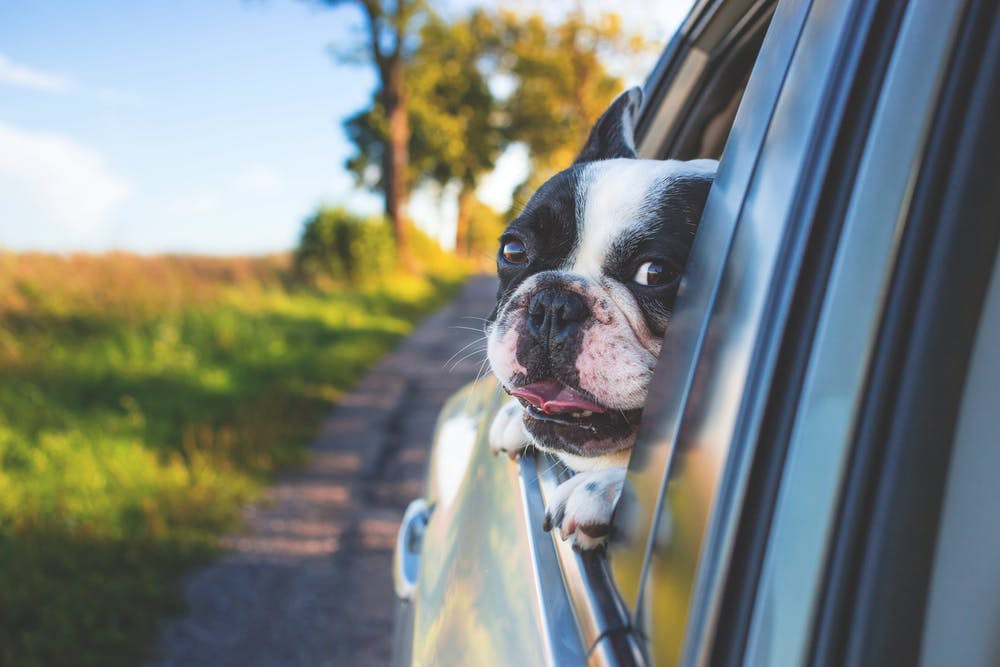
Do not let the dog travel with its head out of the window. Never leave it unattended in a car as a care arrangement. If it drools, vomits or becomes distressed, speak to your vet about travel sickness or fear rather than simply changing seat positions.
Check fit, clips, straps, crate fixings and damage. Confirm the dog cannot reach the driver or become caught in excess tether length. Secure bags and keep the route to water and toileting breaks practical.
After an impact or damage, follow the manufacturer’s replacement advice. Do not assume a restraint remains suitable because it looks intact. Retain instructions and the model details so you can check them later.
Further guidance: Dogs Trust on introducing car travel. For arrival at a new home, use our new-dog equipment checklist.